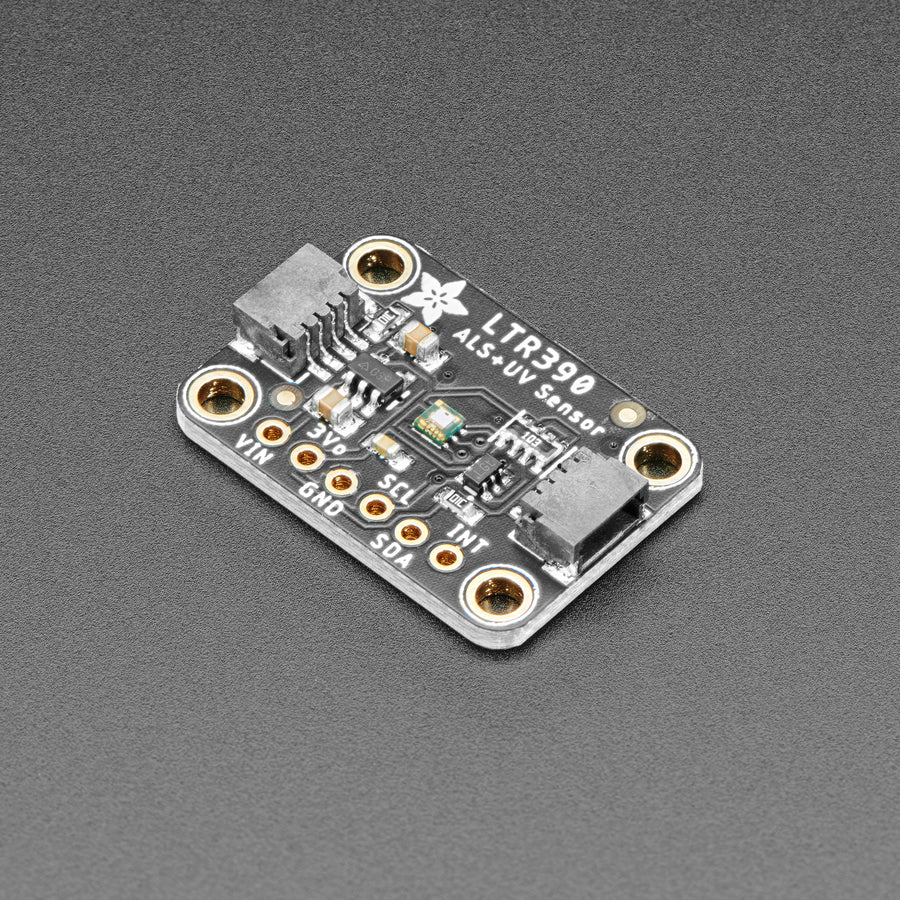
Adafruit LTR390 UV Light Sensor
The LTR390 is one of the few low-cost UV sensors available, and it's a pretty nice one!
With both ambient light and UVA sensing with a peak spectral response between 300 and 350nm. You can use it for measuring how much sun you can get before needing to covering up.
Unlike the Si1145, this sensor will not give you UV Index readings. However, the Si1145 does UV Index approximations based on light level not true UV sensing. The LTR-390, in contrast, does have a real light sensor in the UV spectrum. It's also got a much much simpler I2C interface so you can run it on the Arduino or Python microcontrollers/microcomputers with ease. Unlike the GUVA analog sensor, the biasing and ADC is all internal so you don't need an ADC.
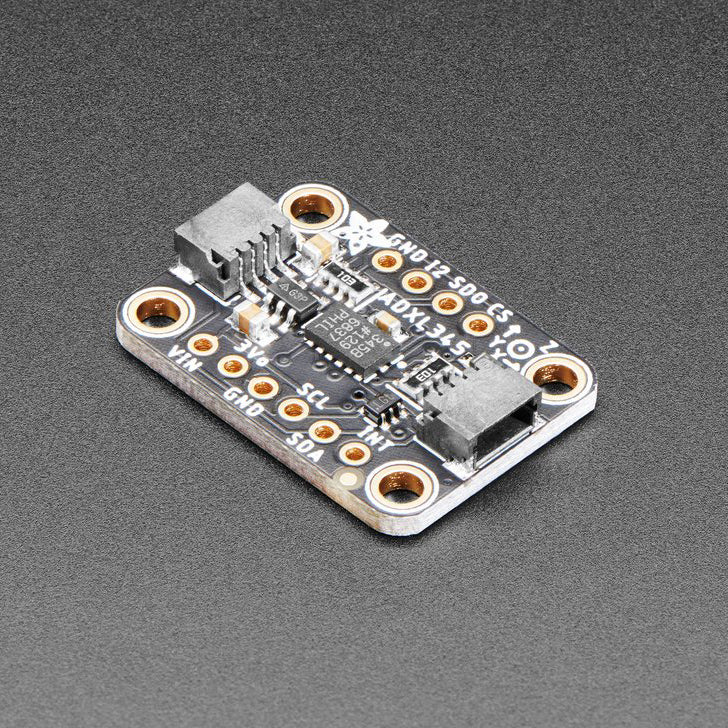
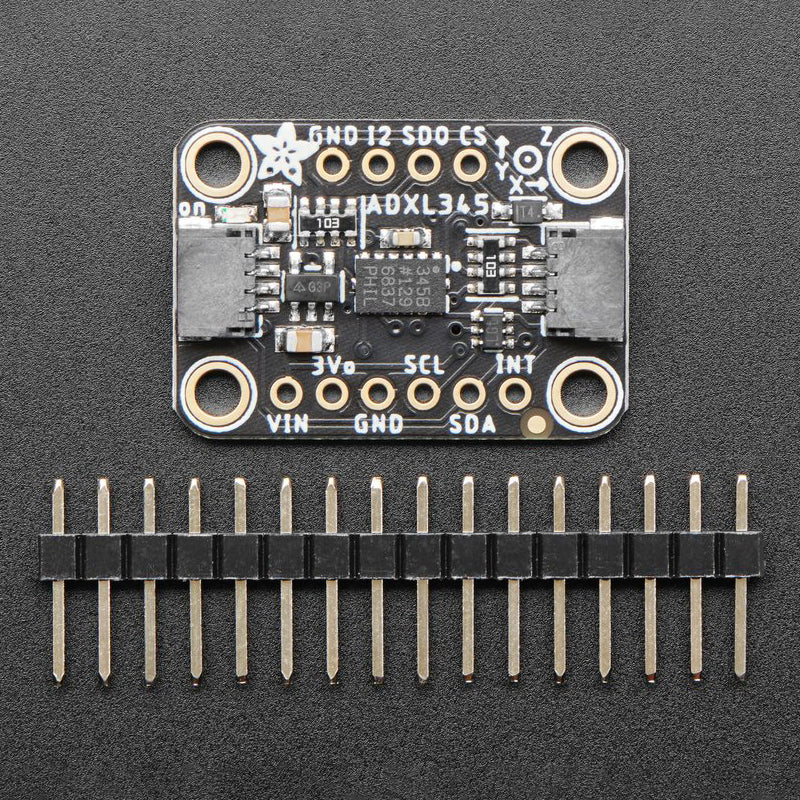
To make using it as easy as possible, Adafriut have put the LTR390 on a breakout PCB in the Stemma QT form factor with a sprinkle of support circuitry to give you options when testing. You can either use a breadboard or the SparkFun qwiic compatible STEMMA QT connectors, and compatibility with 5V voltage levels as commonly found on Arduinos, as well as 3.3V logic used by many other boards like the Raspberry Pi or Feathers. QT Cable is not included, but we have a variety in the shop for quick plug-and-play support.
LEARN
Adafruit LTR390 UV Sensor - UV Light detection in a little board
Product Information
Product Information
Shipping & Returns
Shipping & Returns
Description
The LTR390 is one of the few low-cost UV sensors available, and it's a pretty nice one!
With both ambient light and UVA sensing with a peak spectral response between 300 and 350nm. You can use it for measuring how much sun you can get before needing to covering up.
Unlike the Si1145, this sensor will not give you UV Index readings. However, the Si1145 does UV Index approximations based on light level not true UV sensing. The LTR-390, in contrast, does have a real light sensor in the UV spectrum. It's also got a much much simpler I2C interface so you can run it on the Arduino or Python microcontrollers/microcomputers with ease. Unlike the GUVA analog sensor, the biasing and ADC is all internal so you don't need an ADC.
To make using it as easy as possible, Adafriut have put the LTR390 on a breakout PCB in the Stemma QT form factor with a sprinkle of support circuitry to give you options when testing. You can either use a breadboard or the SparkFun qwiic compatible STEMMA QT connectors, and compatibility with 5V voltage levels as commonly found on Arduinos, as well as 3.3V logic used by many other boards like the Raspberry Pi or Feathers. QT Cable is not included, but we have a variety in the shop for quick plug-and-play support.
LEARN
Adafruit LTR390 UV Sensor - UV Light detection in a little board